
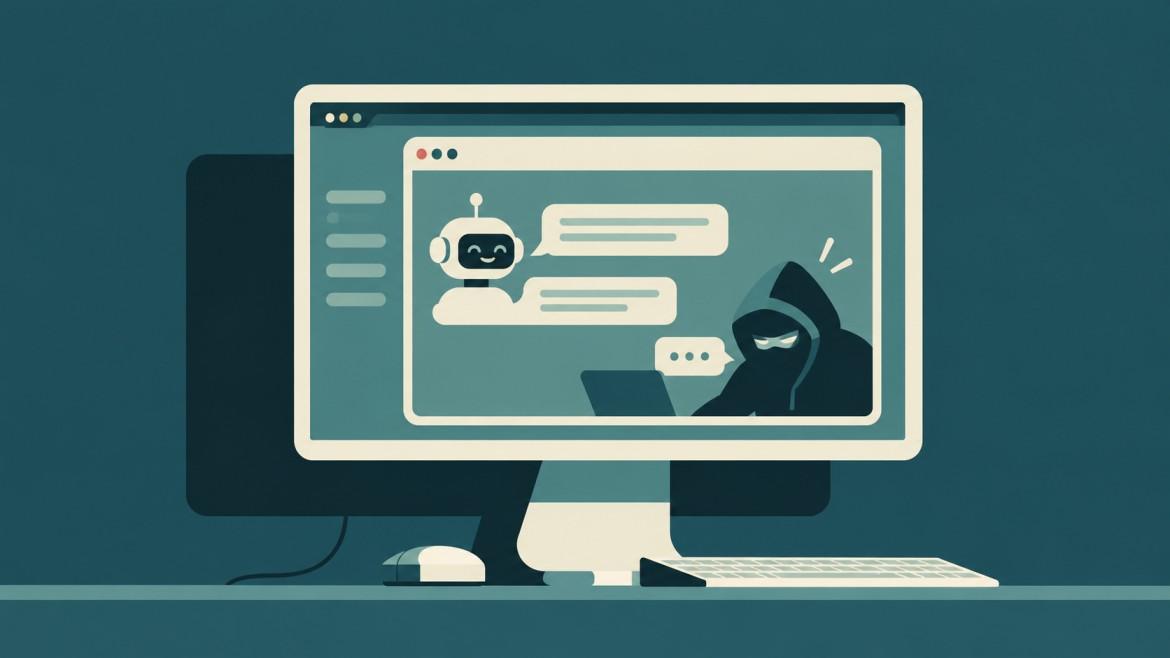
In 2021, Dali Kaafar, at the time a professor of computer science at Macquarie University in Sydney, found himself in a scam call while having a family picnic and spent 44 minutes talking with the scammer, as reported by TechCrunch. It was over for him but the idea stuck in his mind. "If I could do that just for fun," he told Cointelegraph, "imagine what technology can do at scale."
Five years later, the company founded by him called Apate claims that its AI agents have engaged in over 2.5 million conversations with the fraudsters while consuming 17 years of their time. In the recent WIRED analysis, Kaafar estimates the army of bots to consist of roughly 350,000 units which gathered over 250,000 pieces of real-time intelligence, including scam URLs, money mule accounts and bank details. The numbers come from the company itself and may sometimes be inconsistent – Cointelegraph noted 200,000 personas only weeks before that. Nevertheless, the tendency is evident. Scambaiting, once a hobby of many YouTubers, becomes an industrial tool against the frauds. And the true value of it is not about wasting time but gathering intelligence from criminals when they are not aware of that.
A marketing gimmick to a business tool
The first mass-scambaiting AI appeared in the form of a marketing campaign in November 2024. At that point, Virgin Media O2 launched "Daisy," an AI grandmother who discussed knitting patterns and family while offering fake banking credentials to scammers to hold them back for up to 40 minutes. While the character drew lots of attention in the media, her primary purpose was purely advertising and raising public awareness.
However, today’s usage takes on another meaning. Apate began its journey through a federal grant collaboration project with Commonwealth Bank. Since then, the provider TPG Telecom has redirected almost 590,000 potentially fraudulent calls to the organization's agents. Last August, Apate completed its seed financing amounting to $8.15 million, aiming to deploy its solution to London and New York. Meanwhile, Netcraft, a British firm, worked on developing its ChatGPT-based AI victim emulator for two years. In the news release, Dark Reading revealed some interesting results obtained during tests: the project identified compromised user accounts across more than 600 financial organizations located in 73 nations. As shown in one interaction, the attacker boasted of a $5 million legacy; however, he accidentally provided 17 different account numbers from 12 separate banks to his interlocutor.
Engineering a Perfect Victim
These tools rely on a continuous stream that includes three modules – the transcription of the caller’s speech using voice-to-text algorithms, generation of answers based on pre-set language models, and reading out the responses through text-to-speech processing. As reported, O2 presented Daisy precisely as such a pipeline. Latency makes the difference in terms of realism here. While half a second of delay results in machine-like behavior, even an old confused person may stay believable within a slightly extended period of one second. During the tests organized by WIRED journalists pitting off scammers against Apate’s demonstration victims, such as “Lucy” and her financial consultant, “Mickey,” the dialogue proved sufficiently realistic in terms of timing. Meanwhile, scammers faced a very challenging interlocutor, whose skeptical attitude never prevented them from finding room in conversation. Six minutes worth of cryptocurrency schemes did not produce even a thought of investing from “Lucy.”
Frustration is precisely what was expected from this tool. According to Apate founder Kaafar, his aim is creating “perfect victims for scammers.” These are individuals who perpetually appear close to making a payment while consistently failing to take the final step toward doing it. In its current version, Apate includes several personas with distinct characteristics concerning age, sex, dialect, and language, all of which it trains with previous encounters with the fraudsters. At the same time, the persona determines the type of data that is extracted from each interaction. Robert Duncan, Netcraft CEO, revealed Dark Reading that new personas in Italy led to the influx of more Italian accounts into the database.
Time is a weak weapon; data is a strong one
It might be relatively easy to comprehend why engaging with a bot wastes a significant number of minutes for criminals who would otherwise engage with an actual victim. Nonetheless, the economic viability of such actions raises many questions. In terms of losses suffered annually due to scams, the Global Anti-Scam Alliance estimated the total sum to exceed $1 trillion, while Macquarie's sources estimate only 1% of criminals' capture rates. The calling activities are mostly carried out from industrial camps located in countries such as Myanmar and Cambodia, where labor supply is virtually limitless and highly controlled, meaning that a lost hour of work will result in negligible losses for a scamming business.
At the same time, losing its ability to collect payment represents the critical challenge faced by any scamming enterprise. Anytime a scammer reveals mule account details to "Lucy," she exposes herself to freezing by the banking service provider before the main scamming victim transfers any money into said account. "Most of the industry works after the fact. Telcos block numbers, but scammers just get new ones," explained Apate co-founder Brad Joffe in an interview with TechCrunch. "We go to the scammer directly and get the information before anyone gets hurt." Unlike the number, replacing the compromised bank account becomes a complicated issue.
What the dashboards do not reveal
It is important for readers to approach the scoreboards with caution. No figure, including Commonwealth Bank's claimed 76% reduction in scam losses in publicly disclosed scams, has undergone an independent audit, with all coming from the vendor companies. Moreover, there is no proof that the decrease was due to bots. While Apate's well-known tendency to celebrate the swear words of scammers in public is great copy, it only measures annoyance and does not measure prevention.
Another issue is that of ethics. According to the UN report cited above, the call taker is sometimes a trafficked individual beaten up for failing to achieve targets. In that case, wasting his/her time may end up penalizing the wrong person. However, the vendors have done very little to publicly address the problem.
Finally, there is the matter of the technology arms race. The researchers from Apate suggest that 20-30% of scam text interactions are already performed using AI. Moreover, according to Duncan from Netcraft, in 2024 "we would be very surprised if we weren't already talking back to AI". When bots interact with other bots, time wasting only costs compute for the scammer, while intelligence gathering still works. Apate claims that defenders have a game theory advantage here, but this is yet another claim.
Now, however, the concept is making its way to network defense. According to the researchers at ETH Zurich studying the effectiveness of HTTP honeypots with the use of large language models, the LLM-driven decoys kept AI-based attackers occupied for a substantially longer time, while being more difficult to identify as such.
Key takeaways for policymakers
For banking institutions, telecommunication providers, and regulatory agencies involved in the issue, the critical aspect lies in acquiring these systems to enhance intelligence rather than seeking retribution against offenders. These purchases should be evaluated based on results including frozen bank accounts, flagged payment cards, and the effectiveness of dealing with fraud cases; not wasted minutes on calls nor verbal abuse inflicted. Moreover, the procurement process must involve independent assessments, which are essential for ensuring successful operations. This is important because, according to WIRED experts, the lack of cooperation among relevant parties—intelligence units, financial crime departments, and law enforcement—is currently the bottleneck. A simulated grandma can entertain criminals through conversations lasting up to an hour. Ultimately, however, what really matters is whether the bank manages to freeze the suspect's account by that time.