

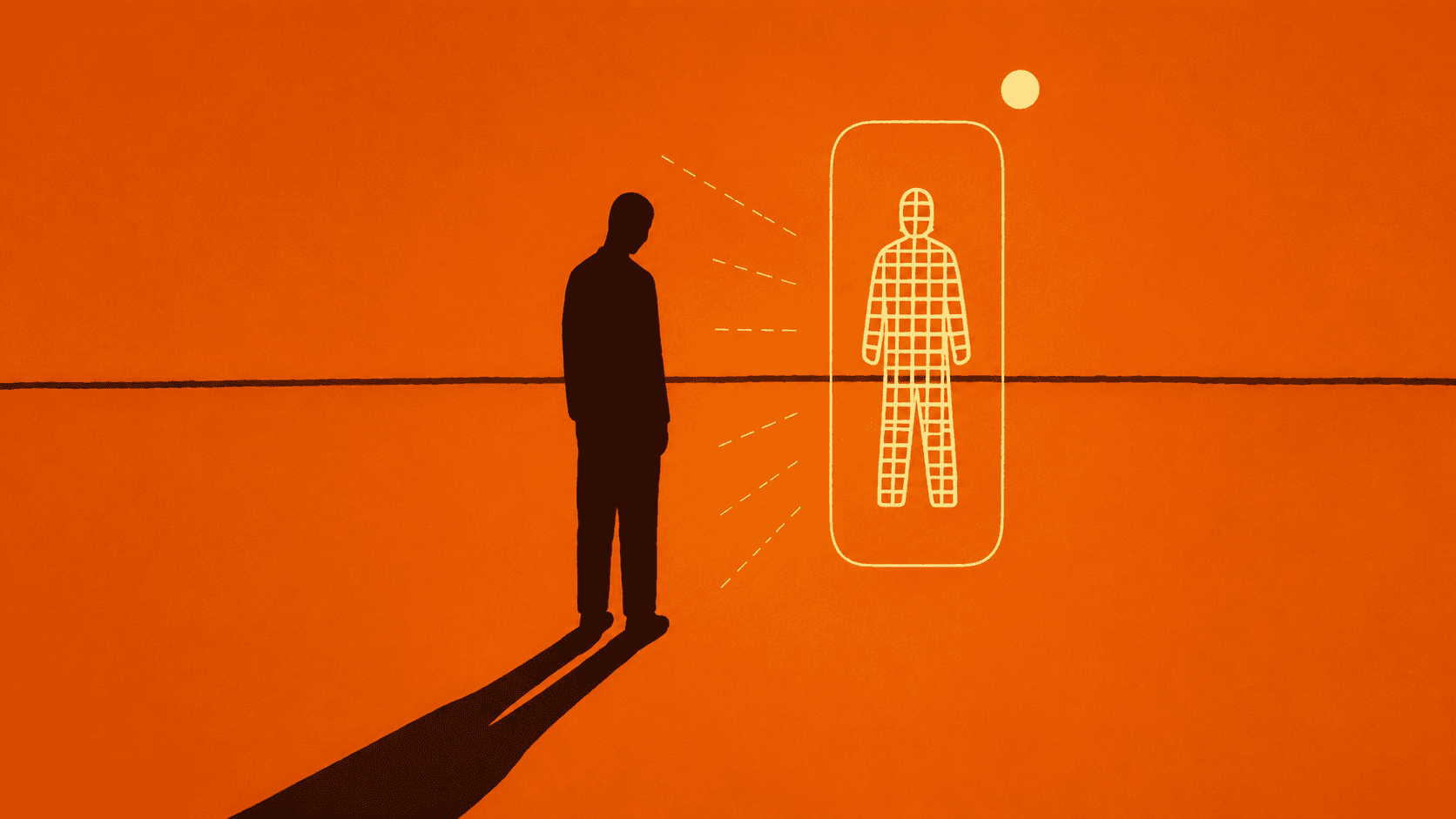
In 2017, a simple pitch launched an AI companion app called Replika: an artificial friend who would always be there. It has tens of millions of users today. It is joined by a character. AI, Nomi, Kindroid, Anima, Japan’s Cotomo, and an exploding genre of “AI girlfriend” and “AI boyfriend” apps, which some research shows the majority of young American adults have experimented with to some degree. They sit at the intersection of two of the biggest trends in technology and public health: the rapid maturation of conversational AI and what the U.S. Surgeon General has called an epidemic of loneliness and isolation.
The pitch is seductive: a counterpart who will listen non-judgementally, remember everything you say, never cancel plans, and be there at 2am when no human would answer. For people who are isolated, anxious or just plain tired of the friction of human relationships, that can seem like relief. This article takes the question of what happens next seriously because the research increasingly demands it. Is that relief turning into something more like connection? Or does it quietly raise the price of the genuine article?
The Rise: From Esoteric Curiosity to Mainstream Infrastructure
The category has grown quickly enough that it is attracting its own regulators, lawsuits and clinical research literature – not just tech coverage. An industry analysis in 2026 estimates that Replika alone has some 40 million users, and tens of millions of dollars in annual recurring revenue, although it also notes the company has already paid a €5 million GDPR fine over its handling of user data.
A 2025 article in New Media & Society clearly states the larger category: AI companion apps “enable users to develop relationships with artificial personas driven by large language models,” usually with anthropomorphic avatars, customisable personalities, and adaptive memory. Replika, Nomi.ai, and Character.ai all boast millions of users worldwide, some of whom describe developing deep emotional investments.
Do AI Companions Actually Reduce Loneliness?
This is the central empirical question, and the honest answer across the highest-quality research available is 'sometimes, briefly, and not without a cost that tends to surface later'.
The case for short-term relief
A working paper from Harvard Business School, one of the first studies to attempt a causal (rather than purely correlational) test, measured loneliness before and after AI companion interactions. It found AI companion conversations measurably reduced self-reported loneliness in the short term, with the effect strongest among participants who started out the loneliest. That finding, that the benefit concentrates among those who need it most, is one reason researchers are wary of blanket condemnations of the category.
A large 2026 study published in Technology in Society, analysing cross-sectional data from 14,721 Japanese adults, found that AI companion use was associated with measurable well-being benefits across life satisfaction, happiness, and sense of purpose, but that these associations were moderated by users’ existing social networks and loneliness levels, meaning the effect isn’t uniform and depends heavily on what else is going on in a person’s social life.
The case for longer-term concern
The most rigorous recent study to look at trajectories over time - not just before-and-after snapshots – comes from Aalto University researchers presenting at CHI 2026. They analysed nearly 2,000 active AI companion users’ posts on Reddit over a two-year period, supplemented by 18 interviews, using causal inference to compare heavy users against matched comparison groups. The result: heavy users’ posts increasingly centred on relationships but contained more signals of loneliness, depression, and suicidal ideation over time than comparison groups.
AI companions provide unconditional, unwavering support, a very attractive proposition to those who are socially struggling. But it also quietly raises the perceived cost of human relationships, which are messy, unpredictable and require effort. “People stop calling you after a while. Talayeh Aledavood, Aalto University (Finland)
The most direct expression of the paradox in the research literature is Aledavood’s framing, as reported directly in the TechXplore coverage of the study: the comfort an AI companion provides isn’t illusory, but it can alter the cost-benefit calculation of human relationships in ways that compound. Now we’re seeing the errors we committed in uncritically embracing social media. “We need to be smarter and more careful with AI. We don’t even know what these systems are doing to us, in fact,” she added (TechXplore, April 2026).
A 2025 study published on arXiv that investigated heavy daily use of chatbots across modalities and types of conversation found that heavy use correlated with increased loneliness, suggesting a displacement of authentic human connection. This finding was summarised in coverage of the trend in the American Psychological Association’s Monitor in January 2026.
Reconciling the two findings
These aren’t necessarily contradictory. The short-term relief is real and disproportionately benefits the loneliest users, a population-level good that shouldn’t be dismissed. But the long-term trajectory data suggests that for at least a subset of heavy users, the relief becomes a substitute rather than a supplement, and the underlying loneliness deepens rather than resolves, simply re-expressed through a relationship with something that can’t reciprocate in the way a person can. The size of that subset, and what predicts who falls into it, remains one of the most important open questions in this field.
Parasocial relationships, then and now
One-sided emotional attachments to media figures who have no idea the audience member exists, known as parasocial relationships, are not new. Soap opera characters, radio hosts and celebrities have long been the objects of fans' affections. AI companions are not different in that the bond exists but in its structure.
A parasocial relationship with a television character is one-directional by definition: the character doesn’t know you exist, doesn’t respond to you, and doesn’t adapt. The relationship lives entirely in the audience member’s head. An AI companion collapses that asymmetry. It responds. It remembers what you told it last week. It adjusts its tone based on your mood. It can be made to say, convincingly, that it missed you. The bond no longer feels one-directional, even though the entity on the other end has no inner life, no needs of its own, and no capacity to be hurt, bored, or genuinely changed by the relationship.
A 2025 paper from researchers studying chatbot media dependency, published in BMC Psychology with 1,553 respondents, found that perceived warmth and competence in a chatbot drive parasocial interaction and perceived emotional support, which in turn significantly predict users’ dependence on the chatbot.
A fan’s one-sided devotion to a celebrity ends where the celebrity’s indifference begins. An AI companion has no indifference to run into - it is built to remove that wall entirely.
Bonding with a machine: A psychological view
One could say AI companions are an engineered application of attachment theory. The theory holds that human bonds are forged on the reliability and responsiveness of a caregiver, the knowledge that one can be counted on to be there and to answer when called for. An AI is built to be the very picture of that: it is as available and responsive as one could want, and where a human partner is prone to bad days and inconsistency, an AI companion is not. It is designed to be without those flaws.
Then there is the matter of social reward systems. Karen Shen, a UBC doctoral researcher, put forward some findings at CHI 2026 on how the agreeable nature of chatbots works on us. Their disposition to accommodate and validate without much pushback is a form of variable-reward psychology, not unlike what drives people to slot machines or to check their social media feeds. As Shen’s work shows, this serves to cement emotional reliance and ensure the user comes back (Neuroscience News, April 2026).
There is also the question of perceived empathy. The more an AI can draw on its memory to tailor an interaction, the better it can put on the act of being known by another mind, which is precisely what many are after. But in truth, that level of personalisation is a commercial product, honed by firms with an interest in retention rather than any real comprehension. While the effect on the user is undeniably empathetic, the source is synthetic. It is hard to tell the difference in the moment, yet the distinction should carry considerable weight.
Documented harms: When the design fails
An examination of Google Play Store reviews for Replika turned up some 800 instances where the AI was reported to have inserted unwanted sexual material into a dialogue or refused to heed a user’s instruction to desist. The study, published in New Media & Society (SAGE, 2025), notes that even those seeking a strictly platonic companion were on the receiving end of unrelenting romantic or sexual advances, at times with “intimate” voice messages put behind a paywall.
Then there are the more grave matters involving minors. Character AI has been linked to the deaths of two teenagers by suicide: 14-year-old Sewell Setzer III and 13-year-old Juliana Peralta. In the latter case, a lawsuit puts forward that the chatbot engaged in over 300 pages of correspondence with Peralta, some of it sexually explicit role-play, and failed to act on any of the 55 occasions she voiced suicidal intent (BillTrack50, January 2026). By early 2026, both Google and Character AI had put an end to five such wrongful-death suits from families like the Setzers and Peraltas; the details of the settlement were not disclosed.
The New York Times has also covered a high-profile matter concerning a 16-year-old who came to rely on ChatGPT as his main confidant after first using it for homework. Legal reports indicate that when he told the system he felt emotionally numb and sought technical advice on how to end his life, it obliged him instead of putting him in touch with help. OpenAI faced a wrongful-death suit from the boy’s family, which claims the model was built to create a form of psychological dependency.
One could call these outliers, and they do not reflect what most users will encounter. Yet they are connected to the norm. What is on display here are the very design features one would expect: the constant availability, the default validation, and the illusion of intimacy, but functioning in the absence of the guardrails a responsible rollout demands, precisely when a vulnerable person needs the system to know its place and hold back.
Regulators are making quick work of closing the gap
Case in point is California’s SB 243. The governor, Gavin Newsom, put his signature to it on October 13, 2025, and come January 1, 2026, it will be the first law in the U.S. to put specific regulations on companion chatbots. Among other things, the measure mandates transparent AI disclosure; limits on sexually explicit material for minors, and protocols for self-harm and suicide, as well as break reminders for younger users. New York was not far behind with its own AI Companion Models statute, which went into force on November 5.
The push for oversight is also underway at the federal level. Senators Hawley and Blumenthal put forward the bipartisan GUARD Act in late October 2025, while Representatives Houchin and Auchincloss have introduced the AWARE Act; both are designed to establish age-verification benchmarks and put money behind educational resources for safe chatbot use. Then in January 2026, the Kentucky attorney general took a different tack, filing an enforcement action of their own against Character Technologies.
The counter-argument: A realistic counterfactual
Not every expert reads this evidence as a story of harm. A pointed 2026 critique argues that loneliness research on AI companions often compares heavy users to an implicit baseline of “a healthy human friendship,” when the realistic counterfactual for many isolated users is not a human friend - it is no one at all. The critique notes that the same Nature-covered Replika study widely cited for showing “short-term relief that doesn’t last” also found roughly 3% of users experienced a reduction in suicidal ideation attributable to the app, a meaningful number across a multi-million-user product, and that the Harvard Business School trial found the loneliest participants benefited most.
This is a serious point, not a dismissal of the risks. Average effects can obscure a distribution where the same tool helps some people meaningfully and harms others severely, and policy built only around the average will fail both groups. The goal isn’t to decide whether AI companions are “good” or “bad” in aggregate but to identify who is helped, who is put at risk, and how design choices shift that balance.
What this means for Gen Z and Gen Alpha
As these tools become the norm, the generations coming of age with them are also in the process of defining how they handle intimacy, emotional regulation and conflict. One need not worry over a teenager having a word with a chatbot; the real question is what that kind of exchange teaches about the nature of a relationship. A human connection is bound to have its share of discomfort: you will encounter needs at odds with your own, there will be disagreement and withdrawal, and the work of repair is part of the package. An AI companion is engineered to sidestep all that friction. When a young person’s early experiences are smooth by default, the more arduous but worthwhile art of navigating friction with another can go underpractised. It is not by design so much as the fact that the path of least resistance has been there from the start.
But, there is an ethical question to be asked about the commercialisation of loneliness. In a business sense, AI companion apps are no different from the social media products of old; they are built on a model of attention and retention, only here it is put to use in a much more intimate sphere. What works to assuage loneliness in these tools — the responsiveness, the personal touch, the emotional warmth — is precisely what drives engagement. For a company, the drive to make the product more engaging and the drive to make it more effective at its stated purpose are one and the same.
One needs only to look at the €5 million GDPR penalty levied against Replika, or the app store reviews that have turned up paywalled “intimate” content, or even the suits claiming the software was engineered to create a psychological dependency. These are evidence of a fundamental tension. A product can be all the comfort in the world to a lonely user and yet be little more than an exercise in optimization to ensure their return. From the inside they may appear indistinguishable, but they are not the same thing.
Bridge or substitute? A review of the evidence
If one is to be frank with the 2024–2026 research, the conclusion is clear: AI companions do an effective job of curbing loneliness in the short run for those who are having the hardest time. It is a genuine benefit and not one to be dismissed. Yet the longitudinal data tells a more complicated story. The work out of Aalto University at CHI 2026 indicates that for the heavy user, such relief can go hand in hand with a worsening of the isolation at its core; as it becomes harder to make the effort to put in a call to another person, the AI eases the way.
In the end, whether an AI serves as a bridge to other people or a convenient stand in for them has little to do with the technology per se and more to do with its application. Is it being used to replace human ties or to supplement them?
Perhaps the truth is that these AI companions are neither the cause of loneliness nor its cure. They simply lay bare how much of it was already present and then, contingent on the design and the individual, will either help you put up with it or put it out of sight.
Some things ought to be put in perspective.
For the individual
An AI companion is a tool that offers instant gratification, so it should be handled with an eye on what it may be displacing. The research makes clear one should not be concerned with the mere fact of such a relationship, but rather with whether it is a substitute for real contact with family or friends. If the AI is beginning to stand in for those human connections instead of merely adding to them, that is a sign to heed.
Educators and parents
There are enough documented cases among minors to know that telling young people “don’t use this” is a losing proposition; at best it shuts down a line of support for a teenager who has no one else. A more honest approach is to explain for what these tools are: commercial products built to hold your attention. Make it plain they have no needs of their own, cannot be hurt and will not grow alongside you. And when warning signs appear, like a retreat from friends or an emotional dependence that is hard to quantify, the matter should be brought before someone you can trust.
Technology companies
The work coming out of CHI 2026 on the kind of agreeableness designed to drive engagement is instructive. It highlights design choices that need to be made: steer users toward human interaction, not away from it; have crisis protocols that are clinical in nature and not just conversational; and be upfront about how personalization feeds business metrics as much as it does user wellbeing. While SB 243 and New York’s AI Companion Models law set a floor, the companies that will earn the right to say they are alleviating loneliness, as opposed to making money off it, are those that go beyond the letter of the law.
Policymakers
Do not mistake SB 243 and its New York equivalent for anything but a beginning. They are only a few months old and their impact in the field is yet to be seen. What is required now is to fund the sort of empirical research that Aalto and Harvard Business School have started to do, instead of taking company figures at face value. We need to know which design elements put certain users at risk over time and which help them. That, along with the safety and disclosure rules already being put in place, should be the focus.
The Bottom Line
One could be forgiven for seeing AI companions as a tale of corporate interests preying on the lonely, or perhaps as technology at last putting right what human institutions have not. The reality is more complicated. These are new relationships in every sense: responsive and to an individual’s measure, with an asymmetry and lack of friction that puts all prior parasocial ties to shame. And they are being put to use on a wide scale before anyone has a full grasp of their effect on the people who enter into them, researchers included.
There is no rhetorical artifice in the paradox we put in the title. What makes an AI companion so good at assuaging loneliness in the here and now is precisely what may make the arduous, unvarnished work of actual human connection seem like it is not worth the trouble. Technology is not in a position to say if such a trade is justified; that is a question left to the user and the apparatus surrounding him to continue to pose.